



In the Cattle Markets
The University of Georgia’s Will Secore provides update on cow-calf costs and returns.
January 6, 2026

by Will Secore, University of Georgia
Between late-November and mid-December, the USDA released a flurry of data following the government shutdown this fall. Many important reports received most of the headlines (e.g., Cattle on Feed). However, the USDA also updated its Commodity Cost of Production and Return information.
The USDA estimates cow-calf operations brought in $1,130 per cow in revenue and incurred $691 in operating expenses in 2024. This revenue figure includes sales of calves, stockers and cull cattle. Operating costs include expenses for feed, purchased cattle for backgrounding, veterinary services, fuel, equipment repairs and interest on borrowed funds.
The difference between these provides a net return (above operating costs) of around $439 per cow in 2024. This would be the highest nominal figure since their data begins in the mid-90s. Adjusted for inflation, this would be around $70 per cow below the high of 2014 and around $17 per cow below 2015’s estimates.
These estimates vary widely across the United States. In 2024, the USDA estimates the Northern Great Plains received the highest revenue per cow at $1,392, followed by the Eastern Uplands ($1,221 per cow) and Basin and Range regions ($1,130 per cow). The lowest revenue region was the Fruitful Rim ($936 per cow).
The regions with the lowest operating costs per cow were the Fruitful Rim ($384 per cow), Southern Seaboard ($527 per cow), and Mississippi Portal ($587 per cow). The region that was estimated to have the highest operating expenses was the Northern Great Plains at $952 per cow.
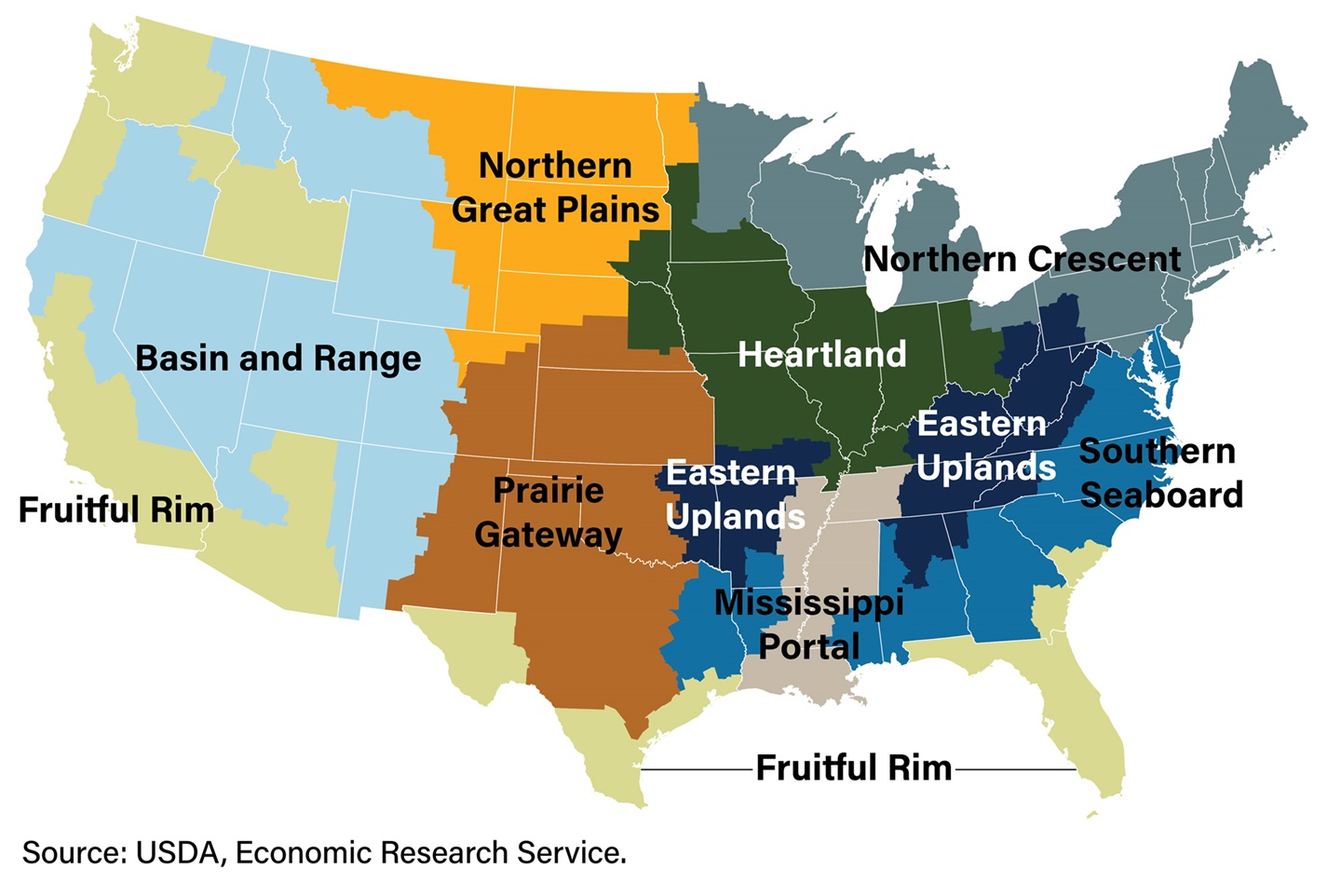
Fig. 1: U.S. map showing nine farm resource regions designated by the USDA
The nine regions are Fruitful Rim, Basin and Range, Northern Great Plains, Prairie Gateway, Heartland, Eastern Uplands, Mississippi Portal, Northern Crescent and Southern Seaboard.

According to the USDA, the Fruitful Rim region saw the highest returns at a little more than $550 per cow, while the Prairie Gateway area of the United States is estimated to have the smallest returns at around $335 per cow in 2024. These differences in returns reflect differences in revenue and operating costs, but operating costs appear to dominate differences in revenue. For example, the Fruitful Rim region is estimated to have had the smallest revenue in 2024, but also the smallest operating expenses.
2025 was another strong year for cow-calf producers across the United States. It is likely the final figures for last year will show returns exceeded those of 2024 and may have surpassed those in 2014 and 2015.
Given the supply outlook for the year ahead, 2026 will likely be another strong margin year for producers. However, there are risks: continued market volatility from this fall and winter, policy uncertainty, reduced processor capacity, and risks of high-priced beef reducing quantity demand. Exactly how strong 2026 will be is still yet to be determined.
Editor’s note: This article is reprinted with permission from the Livestock Marketing Information Center, where it was first published Jan. 5, 2026. Will Secore is assistant professor and extension livestock economist in the Department of Agricultural & Applied Economics at the University of Georgia.
Angus Beef Bulletin EXTRA, Vol. 18, No. 1-A
Topics: Industry News , Marketing , Management , News
Publication: Angus Beef Bulletin
Related Content