





On a Handshake
Brent Thiel on partnerships, progress and problem-free cattle.
April 14, 2026
Early in his career, South Dakota cattleman Brent Thiel came to a fork in the road, and the path he took made all the difference.
At the time he was a fieldman for the American International Charolais Association, when a friend suggested Thiel buy a neighboring ranch and they partner. On a recent episode of The Angus Conversation, Thiel said he loved that job, but he was about to marry his fiancé, Nancy, and the prospect of the nights on the road versus a steady homebase near Isabel, S.D., eventually pushed him into production.
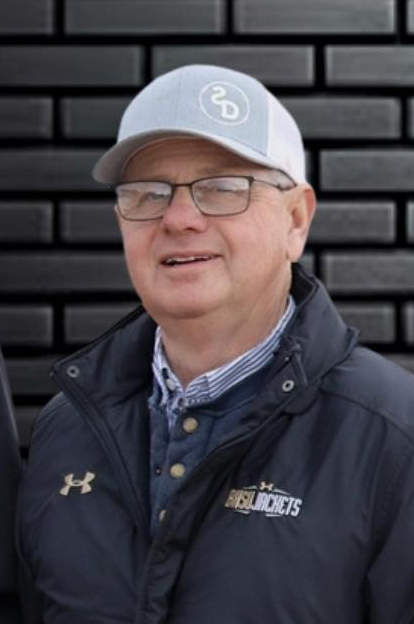

“I always have thought if I didn’t really like my cow herd, I didn’t really want to be in the business.” — Brent Thiel
“My years at the association were great, and I cherished them and the chance that I got to see how an association runs,” Thiel said, “So I'll always cherish that as a background, but generally as you decrease population, you increase interdependency.”
Strong relationships frame the success of their Lindskov-Thiel Ranch, where they first raised Charolais cattle and then added Angus.
“Western South Dakota can be a harsh and little bit wide open country, but it's blessed with a lot of really good people,” Thiel said, noting that a large chunk of their customer base still comes from within a hundred-mile radius of the ranch.
That proximity made it easy for the breeder to see how his decisions played out in the real world.
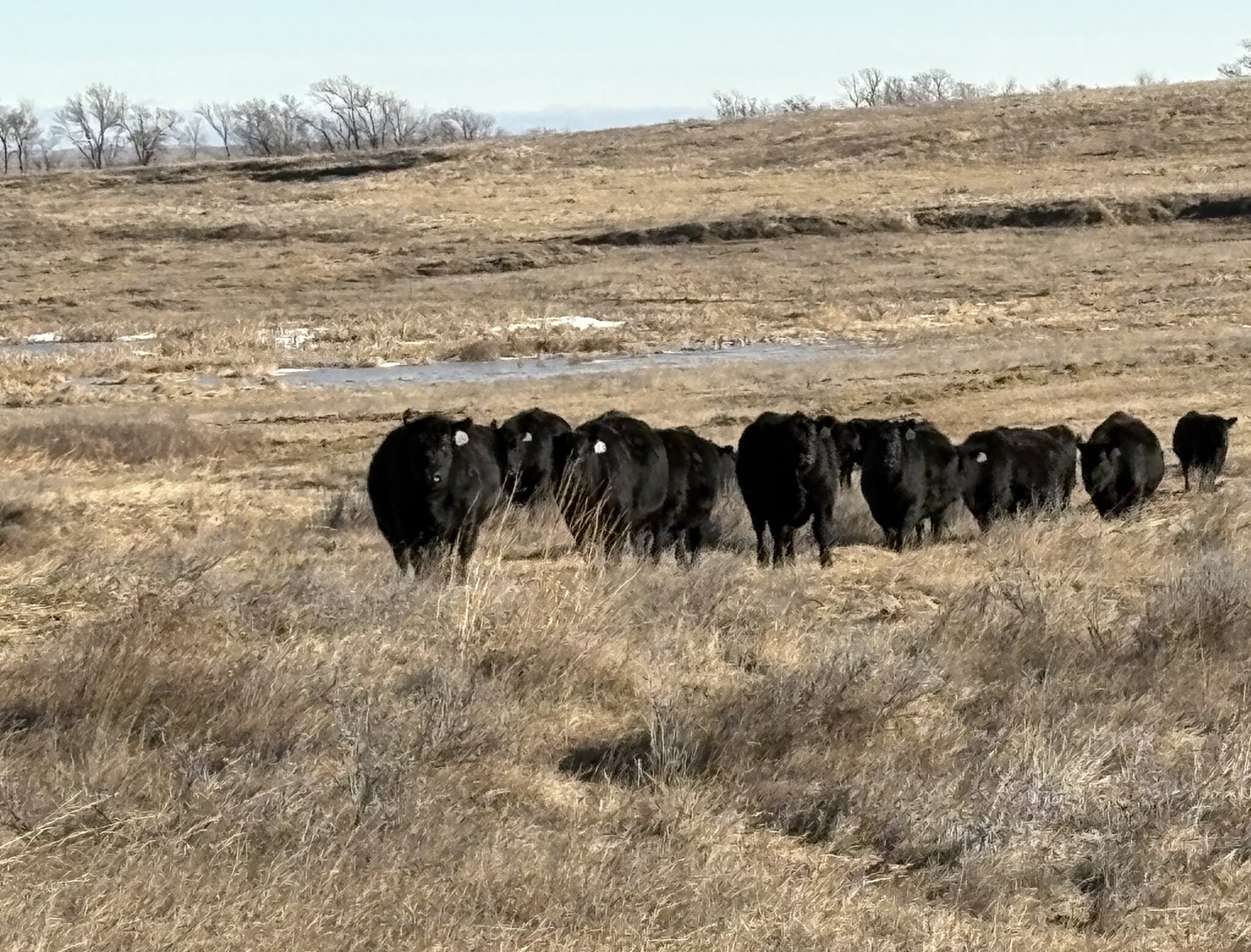

“I would start in August and just start visiting customers and ranch to ranch visits,” he said. “That prompted a lot of exposure, and then I started buying some of those feeder cattle, so it’s a pretty commercially minded [herd.]”
If he’s known for a type, he hopes its moderate phenotypes, with a bend toward “problem free,” maternal cattle.
“I always have thought if I didn’t really like my cow herd, I didn’t really want to be in the business,” Thiel said.
After nearly four decades as partners, the Lindskov and Thiel families amicably parted ways a few years ago to allow for future growth for the next generation and slowing down for his own.
“I can still do some ranching, and it kind of keeps me out of trouble, and I do like cattle and genetics and the people especially,” he said. “And so, I can still do that, but don’t have quite as many pressures on a day-to-day basis.”
The episode covers everything from the ways their partnership worked to advice on staying the course on cow type and kind. He admits to making mistakes along the way, but overall the fork in the road turned out better than he thought possible.
“The good Lord took care of us,” Thiel reflects.
EPISODE NAME: On a Handshake — Brent Thiel on Partnerships, Progress and Problem-Free Cattle
Brent Thiel was early in his career with the American International Charolais Association when he got a nudge that changed the trajectory for him and his family. He bought a ranch and started a partnership that would span nearly four decades. During that time they grew the Lindskov-Thiel Ranch to become a household name in western South Dakota, with Angus and Charolais genetics that traveled around the globe. In recent years, they’ve amicably split the ranch, providing a model of how to make what started as a handshake agreement work out in the long run. Brent discusses his philosophies on creating functional cattle, building customer relationships and keeping the long game in mind.
HOSTS: Miranda Reiman and Mark McCully
GUEST: Brent Thiel was raised on a sheep and horse ranch near Aberdeen, S.D. He earned an ag journalism degree from South Dakota State University and briefly worked for the Tri-State Livestock News before taking a job as a fieldman for the American International Charolais Association. That job introduced Brent to his wife, Nancy, and they married and moved to South Dakota and started Lindskov-Thiel Ranch in partnership with Les and Marcia Lindskov. That business arrangement would span nearly four decades, growing them into a household name in both the Charolais and later Angus circles, before splitting up the partnership to allow for future growth in different directions. Today, the Thiels raise Angus cattle under the Thiel Ranch banner and take time to visit their two grown children and their families “down South.”
SPONSOR:
Angus Media: A solid herd starts with the cows. Commercial cattlemen need to know that your foundation is built on maternal traits. Tell them in the Female Foundations special section published with the September Angus Beef Bulletin. Get an advertisement, feature and social post all in the same package. Contact your regional manager or our advertising team to learn more. Find them here.
Angus Media: You are the most powerful marketing tool you have. Share your story directly to potential customers with a creative video by Angus Media. Our videographers are also cattle people, so they know how showcase your Angus cattle and can help bring your story to life. Let them put you at ease as you show them around your ranch and explain what sets you apart. Visit AngusMedia.org to get started today.
Miranda Reiman (00:02):
Welcome to The Angus Conversation. I'm your host, Miranda Reiman with my co-host, CEO of the American Angus Association, Mark McCully. Mark, I just grabbed you from a speaking event this morning. Come to do a podcast this afternoon. You've had a lot of words, a lot of speaking.
Mark McCully (00:18):
A lot of speaking. No, it's been good. I'm starting to run out of voice a little bit this evening, but no, had just a fantastic opportunity to join the Women's Connected Conference. Some of you may be familiar with that, put on and organized by the Angus Auxiliary with funding and support from the Angus Foundation. Happens every other year. One year it'll be here in the St. Joe, Kansas City area. The next time it'll be in Wooster, Ohio, centered around Certified Angus Beef and then alternate back and forth. And what just a fantastic group of ladies that ... And I think as I spoke to the group, it really represented the diversity that we have in our membership. We had folks that were there that were a long time involved in the breed and multi-generational, and we had folks that were brand new and really looking for ways to get plugged in.
(01:09):
And so, just speaks to so much of the great work that the Auxiliary does on our behalf. And as I said in my opening comments last night at dinner, I think times being intentionally working at connection is just so important. And that's, I think, what that event was about. And so I know the Auxiliary does so much great work. Some know about the Women's Connected Conference and some know about the CAB Cook-off, that's one of my favorite of the works of the Auxiliary.
Miranda Reiman (01:37):
That's because we both get to judge it and you get to eat incredible food. You're paid to just eat food all afternoon. Eat food and hear some really cool young people talk about the beef industry. It's such a positive thing. But yeah, that's exactly where I think of the Angus Auxiliary. And when you mentioned the CAB Cook-off, that seems far away. But I do know on our website we already have that entries are due May 15th. So if you've got kids in your region or your state that you're thinking should form a team, go check that out on Angusjournal.net and you can find out a little bit more about what's required of that.
Mark McCully (02:14):
It'll be another good one, I know.
Miranda Reiman (02:16):
That's right. So from that group of, you said that you got to spend the evening with some really great Angus breeders in that scenario. You've been out on the road a few places to some other, gotten to see Angus breeders there. Today's podcast, we got to hear from an Angus breeder that I don't believe I've ever met in person, but his reputation precedes him. And I mean that in the very best way. That can go both ways, but in the very best ways in that we're interviewing Brent Thiel today.
Mark McCully (02:46):
No, I think folks I think know of Brent and his program and his influence on genetics, both in the Angus breed and other breeds, Charolais breed as well, and just a fantastic opportunity to get inside his mind for some time and hear how he kind of sees the world and how he breeds cattle.
Miranda Reiman (03:08):
So we're going to talk a little bit about their operation, about partnerships, about breeding, and just kind of find out, he's a fantastic human, too. So I think you're going to join this one.
Mark McCully (03:19):
Absolutely.
Miranda Reiman (03:22):
Today on the podcast, we head to South Dakota where we have a South Dakota native, an SDSU alum, ag journalism alum, which is of course near and dear to my heart. We have that in common in Brent Thiel from Thiel Angus. So thanks for joining us today, Brent.
Brent Thiel (03:38):
Well, thank you. It's a pleasure to be a part of the conversation.
Mark McCully (03:41):
So Brent, I think some would be surprised by this ag journalism degree. I was when I learned that in your bio.
Brent Thiel (03:48):
Yes. About the time I went to college, the ag economy was pretty tough in the '70s and the early '80s. And all of my ... I have three older brothers and they had all gone to SDSU with an animal science degree. And my dad thought maybe I should garner something a little different in an attempt to find a job. And he was right. I was very lucky. And so I got an ag journalism degree and I'm also not too sharp. So at that time, the journalism school was almost like a vo-tech. And so it was kind of hands-on and that fit me very well. So then I was lucky enough to be on the college judging team. And so when I got out of college, I actually had a few doors opened just because of a little bit of a diverse background.
Miranda Reiman (04:38):
That's amazing. So I've got to know, when you went to college there, were you still at Yeager Hall above the printing press and all of that, or was it located somewhere else? No, same place.
Brent Thiel (04:49):
Yep. The old journalism building right in the center of campus. And yep, like I say, I probably couldn't have graduated from anything else, but I did get through that. And so it was fun.
Miranda Reiman (05:00):
Yeah. No, very fun and nice. At SDSU, that's one of the reasons that I selected SDSU was exactly that hands-on experience and good practical industry connections and all of that. So, very cool.
Brent Thiel (05:12):
Yeah.
Miranda Reiman (05:12):
Good. So then right out of college, you started working for the Tri-State Livestock News?
Brent Thiel (05:18):
Yep. I had actually done an internship, which was part of the ag journalism program with Tri-State Livestock. As I said, I was lucky enough to have some opportunities. And the American International Charolais at that time was based in Houston, and they had been pursuing me. My dad was an acquaintance with Forrest Bassford, who would've been a publisher emeritus and published several different livestock publications and was kind of a giant in his era. And Forrest took a liking to me. And so anyway, they were kind enough to offer me a job, but I really didn't want to live in Texas. And so I did work for Tri-State Livestock for a year, and that was a great experience. And then the association in Texas offered me to live anywhere I wanted. And so then I started working for them and kind of lived north of Sturgis, had great opportunities.
(06:16):
I had everything west of the Mississippi and Western Canada and got to travel overseas some. And so I was single and I was kind of in my element. I truly learned a lot and met a lot of great people and just a great experience for a single young guy.
Miranda Reiman (06:34):
And probably put a lot of miles on when you say the size of that territory.
Brent Thiel (06:38):
Yep. Yep. There was quite a lot of driving. And then I used to kind of hub out of Denver, Salt Lake City and San Francisco for the airports and different places, but those were the three main ones. And so it was a great experience for a guy had never really been anywhere.
Mark McCully (06:56):
Brent, did you have a registered seedstock background or commercial cattle, or what was your upbringing?
Brent Thiel (07:03):
No, my dad and my grandpa ran a lot of sheep, and then they also fed cattle. And so not a purebred livestock background, except that my dad raised registered quarter horses and was really into breeding horses. And so perhaps that sparked a little of that. But yeah, I owe most of it to him. He's the one that probably helped find me a job.
Miranda Reiman (07:31):
And you mentioned in there that was a good job for a young single guy. So where did wife Nancy enter the picture?
Brent Thiel (07:37):
Well, at that time, the Charolais Association was in a bit of turmoil, and so they owned a square block of downtown Houston and right next to the Shell Oil Company. And so the executive that hired me was released. And the executive that came in during the first year was kind of a visionary, and that was Joe Garrett. And so he persuaded the board to sell that property. And Platte County up north of Kansas City between St. Joe and Kansas City was more than welcoming at that time. And so the association moved up there. And within a couple years, Nancy was a University of Missouri graduate and ag journalism as well. And so my boss then, Joe Garrett hired her and she would've been the editor of the Charolais Journal and the communications director. So we met at the office.
Miranda Reiman (08:30):
OK, very good.
Mark McCully (08:31):
Met at the office. That's awesome.
Miranda Reiman (08:32):
And then wooed her to come north to South Dakota for the winters?
Brent Thiel (08:36):
Yeah, she's pretty gracious. I think she's still kind of getting over that, but
Mark McCully (08:43):
Got her there in June or something before it did. Yeah.
Brent Thiel (08:45):
Well, actually-
Mark McCully (08:46):
Snow would have just melted. Yeah.
Brent Thiel (08:48):
Yeah, that's pretty good. You hit it right on the head, Mark.
Miranda Reiman (08:52):
Then after that, then comes the ranching operation.
Brent Thiel (08:57):
Yep. Les Lindskov got into the purebred business in about 1979 or '80, about the same time I went to the association. And so we weren't really close friends, but we were acquaintances and I had bought him some cattle. And so the summer of '87, Nancy and I were getting married in July. And in that spring, in April, let's say, I came up to visit Les and we came by the ranch where I now live. And he said, "What are you going to do when you get married?" And I loved my job, loved the association, hadn't thought about it, but he said, "Well, this place is going to come up for sale. Why don't you buy that, and we'll partner." And I really wasn't interested. I thought of my, staying right where I was. But as time went on and I thought about raising a family and that, and so we literally moved here that December then in December of '87 and formed that partnership.
Mark McCully (09:50):
You moved a Missouri girl to South Dakota in December. That was good.
Brent Thiel (09:55):
Well, she actually came in May to prep for the wedding. And luckily the Black Hills are a little more gracious. And so she was there for the first few months.
Mark McCully (10:05):
There you go. Good. Yeah.
Miranda Reiman (10:06):
And so the place that you moved to, was it move-in ready? It was already a working ranch, all of that. Did you have a lot of improvements to make?
Brent Thiel (10:15):
Yep. The lucky part were, the buildings were here, the rest of it we've kind of redone. But yep, it's actually nothing fancy, but it's real practical and it's right along a highway, which we're in a pretty remote area. So that's actually a big plus. We've had, Les and I had, I don't know, 35, 40 sales here or whatever at this place. So over the years, it's seen a lot of traffic. Sure.
Mark McCully (10:40):
You guys as a partnership truly created obviously a brand name that's known around the world in the genetics and seedstock space, both obviously in the Charolais side first and Angus later. Talk about the keys to that partnership. Working in partnerships on an operation like that, what made that work?
Brent Thiel (11:04):
I think several things. One, Les is a great guy, and he's a visionary. He was always looking into the future and probably a little stuck in the mud. Two things that really helped that is even though we were in a partnership, we didn't work together every day, side by side. And we might talk two or three times in one day, but we might not talk for two weeks and things just went well. The other thing that really helped, Mark, is we were always blessed with really good sales and we had a lot of local and regional support. And so when things were going well, everything's just a little easier. But Les and I had a good relationship and I think kind of a mutual respect. And his wife, Marcia, is just a great lady and the four of us all got along well. And so I couldn't have drawn it out much better.
(11:57):
The good Lord took care of us.
Mark McCully (12:00):
Oh, that's awesome.
Miranda Reiman (12:00):
Did you guys draw it out when you first started or was it kind of a handshake deal?
Mark McCully (12:05):
Figure it out as you go?
Brent Thiel (12:06):
Yeah, no, we actually didn't. I don't think we had anything in writing even for several years, and it was just pretty much, fly by the seat of our pants. But we had a common goal, and Les is very good with customer relations and dealing with the public. And so I could kind of ride under that umbrella for quite a while.
Mark McCully (12:30):
How did you sort? Was that kind of a natural sorting out the roles within a new partnership, or you each knew your strengths and you played to your strengths and it complemented each other? Or was there more of a sit down with a planner and say, "OK, this is my job description. This is your job description."
Brent Thiel (12:52):
Yeah, no, we probably should have had another meeting or two with Robert's Rules of Order. But anyway, we actually did really well. And Western South Dakota can be a harsh and little bit wide open country, but it's blessed with a lot of really good people. And people, to me, it's a lot like a lot of different states, but when I think of Western South Dakota and Nebraska, that, people's handshake goes a long ways. And Les was really good to me and he understood my shortcomings and he just kind of turned me loose.
Miranda Reiman (13:28):
And so of course that worked well for almost four decades, and then you guys decided to divest the partnership or to split. Talk a little bit about that decision, how it came about and how you made that work as well.
Brent Thiel (13:44):
Yep. No, I appreciate your asking. So Les is blessed with four sons and they're all much like him. They're overachievers, very successful, very ambitious. And Nancy and I are blessed with two kids, and our son Skyler went to South Dakota State and got an engineering degree, and he's an engineer in Arkansas. And our daughter went to Baylor and also met a nice guy. And so they live in Texas. And so between Skyler and Abbey, we have six grandchildren. And Nancy really did all of the accounting, the semen invoices, the registrations, a lot of paperwork and a lot to that. So it was kind of time. I could see that Les's sons were very driven, and I actually didn't realize how much I was probably holding them back. And so anyway, a couple, three years ago, we decided that it would afford us an opportunity to travel a little more to see the grandkids and also allow them to sprout in multiple directions.
(14:47):
And so at first I thought, how do you do that? And I wanted to be neighbors and have an amiable setting when we were done, but actually it all worked out good and we divided, as long as you divide the grass and the farm ground equally, it really doesn't matter what value you put on it. And his oldest son, Monty, runs their implement dealerships, a great guy and easy to deal with. And so it was quite easy to evaluate those things. And then it came down to the cows and I kind of knew some things that would make that the most palatable for everyone. And so we sold them all of the Charolais genetics and just kept some of the Angus cows, and we never had a cross word. We ended all of that peacefully and still get along.
Miranda Reiman (15:33):
What a model.
Mark McCully (15:34):
Yeah. And what a testament to your partnership and the integrity of both parties to get through something like that. I know those sometimes can be some hard conversations and some tough decisions. So congratulations on that. That's quite a testament.
Brent Thiel (15:50):
Yeah, thank you, Mark. I feel very blessed. I can still do some ranching and it kind of keeps me out of trouble. And I do like cattle and genetics and the people especially. And so I can kind of still do that, but don't have quite as many pressures on a day-to-day basis.
Miranda Reiman (16:08):
Of course, you kind of took on a second role too though.
Mark McCully (16:11):
Got a new little side hustle this winter I think was announced, right?
Miranda Reiman (16:15):
Talk a little bit about your role with Select Sires.
Brent Thiel (16:19):
Yeah. So Lorna Marshall, over her years with ABS and Genex and that, we had sold or leased them a lot of bulls. And she came up here a couple years ago very graciously to look through the bulls. And Nancy and I went to lunch with her and we talked about kids and grandkids. And somehow the conversation came up and we got to talking a little. So over the last year, I've done a little sire selection for them and I feel like I should be paying them. I've learned a great deal and I really enjoy it actually. And I don't do that much for them. I feel guilty. I probably should be doing more. But once in a while they do have me go look at a bull or two or have a little input. And it's a great team and I've learned a lot from all the different people involved there.
Mark McCully (17:11):
You get to run around and look at cattle and do the thing you love. And that's a place-
Miranda Reiman (17:17):
Get paid mileage for it, even better.
Mark McCully (17:18):
Get paid mileage. Yeah. And yeah.
Brent Thiel (17:22):
Nancy and I were discussing that before I accepted that. And I said, "Well, what do you think? " And she said, "Well, you're going to do some of it anyway. You might as well do a little for both."
Mark McCully (17:32):
There you go. There you go.
Miranda Reiman (17:35):
And with that, we're going to take a quick timeout for this word from Angus Media.
Speaker 1 (17:40):
A solid herd starts with the cows. Commercial cattlemen need to know that your foundation is built on maternal traits. Tell them in the Female Foundations special section published with the September Angus Beef Bulletin, which will reach more than 137,000 readers. Get an advertisement, an article about your herd and a social post all in one. Reserve your spot by June 1st. Call your regional manager or call us in the office at 816-383-5200 to learn more.
Mark McCully (18:14):
Brent, maybe changing gears a little. I know as I've gotten to know you and as I hear of people, you're held in such high regard as a true breeder of, obviously in the Charolais cattle for years and in the Angus breed. And maybe just talk a little bit about what's your type and kind, I guess if I had asked you that today, what's the type and kind that Brent Thiel selects for?
Brent Thiel (18:38):
I've been very lucky. In the early '90s, Les and I took a few pens of bulls to Denver, Charolais bows and enjoyed some success and exposure. But about the mid '90s, we thought, what could we do a little different to set us apart or keep us in business? Maybe it was a good theory. And so a little later in there, we started doing a little customer feeder calf buyback and also placed some breeding heifers in that. And so I was never much of a farmer and the Lindskovs did that. And so when I got done haying and that, then that was my time to work a different field. And so maybe it fit my personality, maybe not, but I would start in August and just start visiting customers and ranch to ranch visits. And I didn't get to all of them every year, but I would rotate around and keep track in that.
(19:36):
And that prompted a lot of exposure and then started buying some of those feeder cattle. So it's pretty commercially minded. And I've made a lot of mistakes. I've got a whole treasure trove of things I shouldn't have bred to or done. But in the Charolais, I tried to breed not with a high coefficient or anything, but a little bit of line breeding. And I did that for several reasons, but I identified a couple sires at that time that were strong in vigorous births, calving ease, and had some carcass merit and just general quality disposition, scrotal, things that maybe needed touched up a little. So we kind of concentrated that. And so it's kind of like braiding a rope. And so we would have two strands of two of those benchmark sires that all trace back to one bull. And then I would occasionally bring in an outcross and braid them together.
(20:30):
And it wasn't scientific and it wasn't always very pretty, but it did build a pretty solid cow herd and maybe more so than it should have been. But in the Charolais, I really focused on the maternal side of it, teat and udder quality and just kind of stayability and maybe a little more fleshing ability, sometimes maybe left a little performance on the table. So that was kind of a basis for it. And so our cattle were probably never the biggest or the most anything, but they hit the middle of the road pretty good and I did have very good stayability in the commercial sector.
Miranda Reiman (21:08):
I think I heard somewhere that you tried to make your Angus and your Charolais match up so that they were similar regardless of if you were buying which breed. Is that right?
Brent Thiel (21:20):
Yep, yep. And so that sometimes isn't what everyone wants, but yes, both cow herds did look quite a bit alike, yep. And some breeders I'm sure thought on the Charolais that we should have perhaps had a little more performance or extended growth, but most all of our customers range calve. And even like today, it's snowing here and it's not a bad blizzard or anything, but vigor at birth and just real, real basic things really are a key factor in keeping a commercial guy afloat.
Mark McCully (21:59):
Brent, do you approach your Angus breeding objective differently from the standpoint of trying to, you'd talked about, and maybe I was interpreting that in your Charolais breeding program where you're trying to line up some, again, do a little bit of line breeding. Do you have the same approach with Angus Genetics?
Brent Thiel (22:17):
Maybe I haven't quite figured out the line breeding part, but I have, if I can stay at this long enough, I'm trying to use two or three main cow families and then it might be through a grandson of one cow or a son of the other cow. And I don't know that it really matters to anyone else except maybe to me, but I'm trying to make those cattle quite uniform and very middle of the road. They hit our environment well. I don't feed any silage and don't do a lot of heavy inputs, let's call it, but I do keep them on very good grass. We do a lot of rotational grazing and not intense at all just because we're so low rainfall, but we use it twice over grazing system. And so we'll hit those pastures in an early season and trim them a little, you might say, and then we'll come back around later for a more extensive grazing.
(23:13):
And so I try to keep them always on good grass, but I always have thought if I didn't really like my cow herd, I didn't really want to be in the business. Yeah.
Mark McCully (23:23):
So Brent, when you think about, I would say there's a lot of breeders listening to this podcast that would say, "That's what I want to do. I want to breed problem-free, middle of the road, avoid the extremes," but sometimes those cattle are harder to market and yet you over your career have been very successful marketing that. What's the key?
Brent Thiel (23:48):
Well, I think mostly luck, but-
Mark McCully (23:51):
You're very humble.
Brent Thiel (23:53):
Well, it's a little bit true, but I had such a wonderful commercial base and not to sound self anything, but those people figured out that they could kind of dial the wrong number and get plenty of performance and plenty of merit, and rightfully, and it's very true. To me, those are the easiest things to add. The kind of unexciting things are sometimes making sure that cow can stay in a high body score and yet raise a big calf and breed back. And every breeder wants all of those things. But I've just been a little luckier in that my commercial guys, they maybe accepted that these cattle were going to be this, but nothing pleases me more when I go visit those customers to say, "Boy, we got some nice daughters out of those bulls." And that's kind of a futuristic thing. Most of us, myself included, aren't that patient, but luckily it did show up and people sort of ... There's only obviously a lot of commercial cattlemen wouldn't prefer these cattle, but there's a certain segment that do and accept them as they are.
Mark McCully (25:08):
Great perspective.
Miranda Reiman (25:08):
So we've talked a lot about the kind of herd as one, but I mean, you were Charolais for a long period of time. You're kind of a latecomer when you look at the whole career to the Angus breed. Why did you decide to add Angus to you guys' offering?
Brent Thiel (25:24):
Well, as I said, Les is kind of the visionary, and I love Angus cattle. And to be candid, he thought at that time, that would've been mid- 90s, that we should add a second breed because we had a lot of commercial customers that were breeding heifers back and also retaining daughters. There had been a cycle in the '70s and early '80s of more Continental breeds getting mixed into cow herds. And anyway, he thought we should incorporate a second breed, and I was all for the Angus. I was a little hesitant. I didn't want to have two breeds and do a poor job with both, but a lot of that credit goes to him. And so we slowly kind of crept into the Angus business.
Miranda Reiman (26:07):
Was it a learning curve or was there enough that was the same between the two, or was there a lot to learn when you added a second breed?
Brent Thiel (26:15):
I'd say a little bit of both. Each association has a different-
Miranda Reiman (26:21):
Different boxes to check.
Brent Thiel (26:23):
Yeah. Yeah. But that part, luckily Nancy's the rock, she got all through that. But I would say something, we looked at two breeds as a possible add-on and easily chose the Angus, and the other breed is very successful in a maternal sense as well. But one of the primary reasons that we both wanted to go Angus, there were two factors, but one of them was the Angus Association and the strength it showed from its leadership and staff, also to the advent of CAB, wasn't what it is today, but it was on the horizon and who knew at that time whether it was going to succeed, but that was in the background a little bit. So those were a couple factors that did help us make that decision.
Mark McCully (27:10):
How did you get started in the Angus business? Did you go extensive ET program? Did you go find a set of cows that kind of fit what you were wanting to do?
Brent Thiel (27:19):
Yeah, that's where I probably should have done some things different, but I actually just got in the pickup and drove around and I went to a number of herds in the Dakotas and Montana, a few in Nebraska. Just looked at cattle, didn't actually buy any of the first little stint there. But then Russ Denowh now up at Gartner Denowh used to have a female sale in the fall and they would sell all of the coming sevens or eights a certain year. So that's actually where we got started. So one of the two main cow lines that we have now that I'm trying to focus on actually, if you trace it back, goes back to that first Forever Lady 852 that came from the Denowhs. And otherwise, I just kind of picked a couple spots and never bought any whole herds. I went at it a little too slow and probably should have done a lot of things different, but we just kind of slowly added the numbers and kind of bred from within after that.
Mark McCully (28:24):
So in an era today where it seems we're always kind of turning generations faster and faster, was it appealing that these were seven and eight year olds that cows that had some built-in longevity or were you- Or
Miranda Reiman (28:35):
Was it just what you could afford? Is that what you're trying to ask, Mark?
Brent Thiel (28:40):
Yeah, I get right down to it. But no, actually that really appealed to me and it just took a little bit of the risk out of the pie, you might say. And so that worked good.
Mark McCully (28:52):
Sure.
Miranda Reiman (28:54):
That's awesome. You talked about just one specific cow line you went back to, but what are some of your favorite animals that you raised or maybe some of your favorite cow families or sire lines you've had over the years?
Brent Thiel (29:07):
Yeah. So the Forever Lady cow that I mentioned, she's had three bulls that have not had a big presence, but that all were sale features that kind of held out, LT Chosen and LT Clarion, LT Chief that were all out of that cow. And so that's one of the two lines. So we've used a couple of those sons and we have some daughters and granddaughters and that sort of thing. The other one is what we call the Nordic cow family and several daughters, granddaughters. And so she has a son called LT Converse that has been a real female maker for me. Like I say, it's kind of at an infant stage, but I've kind of twisted those two lines together along with some others in an attempt to incorporate some of their best traits. And like I say, once in a while, stub my toe.
Mark McCully (29:56):
You've been involved in a lot of bulls in both breeds that I think by that we would say are cowmaker kind, female maker kinds. How do you find those sires that you have the confidence in that they're going to make the females? We're talking about a lot of lowly heritable traits. We're talking about some traits that are a lot harder to measure, but yet you seem to have a knack at finding them.
Brent Thiel (30:19):
Well, I don't know if that's the case, but it's been fun. It's kind of gratifying when one of those clicks. But as I said, I've had my share of busts, but it seems like, and every breeder would tell you, but those good cows kind of carry you when you make a poor decision. I think a little of that comes back from the old Charolais days when maybe more breeders, maybe wisely, but we're selecting a little more on the terminal side and rightfully in that a lot of those bulls were going to go into a cross-breeding setting. But I decided having had that opportunity to travel for the association and seeing herds up on a volcano in Hawaii and Texas and everywhere in between and Canada that I wanted to make them just a little softer and a little easier. But reality is really what drives a lot of those decisions.
(31:14):
And if a calf can't get up in the snow and go, he's really not worth much. And so some of those really basic traits, I mean, I just got hammered onto me over and over with good commercial cattlemen.
Mark McCully (31:27):
I would assume you maybe put more emphasis on the cow side of a pedigree than maybe some, two, three generations back. It's sounding like you will scrutinize those cow families pretty hard.
Brent Thiel (31:39):
Yeah, and that's kind of the fun of it, but I really enjoy. I try not to use or select a bull without looking at the mother and hopefully the grandmother or those kinds of things. And I would encourage breeders to do that. It's not very exciting and it's time-consuming, but a lot can be told in what those cows look like and what their structure is and their udder quality particularly.
Miranda Reiman (32:04):
So you talked about a couple of times now, oh, I've probably made a few wrong turns here and there. How long until you know if it's a mistake?
Brent Thiel (32:14):
Usually pretty fast. Yeah.
Miranda Reiman (32:15):
Really?
Brent Thiel (32:16):
Yeah, I can tell. I was never a big breeder and I always tried to be, I don't know how you'd say it, hands-on in the calving barn and hands-on doing everything and yet not trying to be a control freak. But when you're around them every day and you're in the barn with them at two in the morning, et cetera, you figure things out pretty fast.
Miranda Reiman (32:43):
Don't need to take notes on that one.
Brent Thiel (32:45):
No, I'm a slow learner, but even I can figure that out.
Mark McCully (32:49):
So Brent, over your career, you've seen the emergence and the advent of new technologies, and obviously from EBVs, to EPDs, to indexes, to the introduction of genomics. Maybe talk about your philosophy today of maybe how you think about new technologies when they come about, how you incorporate them, how fast or not fast you incorporate them, and how you approach them today.
Brent Thiel (33:12):
Yeah, I'm really excited or pleased that the American Angus expanded their EPD profile. And the great thing about the Angus breed is it's so big and so vast that not everyone has to have exactly the same thing and not everyone chooses the same thing, but when you added the teat and udder score and the functional longevity and the dollar maternal has been there and the dollar energy, but I think it really has broadened not just the breeders, but also the rancher's perspective and given them a little more to hang onto. And the bull studs are excellent at it and other breeders. But like I say, not every bull has to be for every breeder. And I think it's great that the Angus has broadened that horizon a little bit or a lot actually. And so I'm not a real tech guy, but I do like to look at the numbers, and especially when you get into proven sires that have $100 in production or 50, man, those bulls will eventually come back to the center to some degree.
(34:26):
And it's kind of fun to see, just watch the progression, whether it's in my own bulls or just bulls that interest me. Or sometimes I even like to look up bulls that don't interest me and just see as the data comes in, how they unfold.
(34:44):
And I think over the next five years, as more and more breeders are submitting the basics, let's call it, udder scores, those kinds of things, the accuracy is, it's just going to be phenomenal what the change is going to be. Yeah.
Miranda Reiman (35:00):
Let's hold that thought for just a minute as we hear from Angus Media.
Speaker 2 (35:04):
You are the most powerful marketing tool you have. Share your story directly to potential customers with a creative video by Angus Media. Our videographers are also cattle people, so they know how to showcase your Angus cattle and help you bring your story to life. Let them put you at ease as you show them around your ranch and explain what sets you apart. Visit angusmedia.org to get started today.
Mark McCully (35:30):
So you mentioned the different kinds of cattle and even within the Angus breed that we're able to make today. So with your Charolais background, and you admittedly said you bred Charolais to be a little more maternal, where we tend to think of them as a little more on the terminal side. I guess my question to you, and how can the Angus breed be both maternal and terminal?
Brent Thiel (35:51):
Oh, very much so. I think it's proven it. I think it's all laid out there. And I think breeders can ... I'm talking about commercial breeders, breeders can adapt as if they really want to, they can look at the dollar energy number, for example, or they can look at the $B. And certainly some of the most successful programs are very, very $B and carcass-driven and very successful among the elite. But there's also a segment that may be in a little different environment or a different marketing scheme, particularly when they're selling their calves, whether they're selling them right off the cow or whether they're killing them or whether they're backgrounding them. And so with that diversity, that's the great thing about the Angus breed is it's got so many different directions to offer.
Miranda Reiman (36:41):
You talked about doing some kind of market research there on different genetics. And when you go to look for new genetics, how are you finding them? What's your method? Are you looking with certain parameters, that kind of thing?
Brent Thiel (36:55):
Well, I probably don't get out enough, to be honest with you, and that's a benefit to being able to do a little work with Select, but you kind of learn where maybe the type of cows that fit into your environment, and there's always surprises and always changes. But when you figure out those type of cows work for you or potentially anyway, maybe you gravitate back to that, maybe too much, to be honest with you. And that's one thing I really like about being able to scout around a little bit for Select because off the beaten highway, there's a lot of treasures.
Mark McCully (37:36):
Which you mentioned earlier as a benefit to being a fieldman when you're with Charolais, you got to see the good, the bad, the ugly, and got to see what worked and what didn't work. And obviously we can learn a lot from those programs too.
Brent Thiel (37:52):
Yeah. And so many different environments of management and even the breeders' cultures and their backgrounds and motivations even. The people are what make it fascinating. Sure.
Miranda Reiman (38:08):
Let's talk just a little bit about those people. So your customers specifically, who is your target customer today and maybe, how's that changed over the years?
Brent Thiel (38:19):
Yep. So when Les and I were in partnership, at times, approximately 80% of the customers that bought our bulls were just on these two Indian reservations. So you could draw, and that's with a little give and take, but you could draw a circle of a hundred miles and hit a lot of customers. So the advantage was I could go visit a half a dozen in one day, go west of town or go north of town or go toward Bismarck or whatever, go somewhere, and you could see a lot of people. And because they're so close, you get the chance to develop those relationships a little better. It's a little easier to go 100 miles or 80 miles or 20 to visit a customer as compared to 1,100 or something. So I was very proud of that. And I know at some sales we had up to 11 or 12 ranches just from Isabel buying from us, and it's a fairly remote area, so that's a real plus.
(39:21):
The negative is you got to keep your nose clean. And secondly, if you're in a drought area, you're in a drought area. But anyway, to answer your question, probably over 75, maybe depending on the year, percent of our customers sell their calves right off the cow.
(39:42):
So we're blessed in this area. We have a strong auction system. The majority of cattle go to, in this region, go to four or five livestock markets that are among the national leaders in calf prices, partly due to quality, partly due to location. We're only a few hours from the corn belt and a few hours from the strong feeding country. And so that helps the economics of it. But with the Charolais, as I mentioned, the real basic traits were pretty true. They had to have some vigor at birth and they have some look to them and some shape. And heterosis helped us there a little probably when we didn't necessarily have the highest performance bulls, and we did. And we had some ... I got lucky that the bull we line bred with was born in 1980, and in his era would've been a very high carcass bull.
(40:35):
And in the Charolais, marveling was something we did need to enhance or work on. And so through his sons, grandsons, great-grandsons, great-great-grandsons, it actually got better in that department. So to get to my point, that worked good. And so I kind of alluded to it earlier, but when Les and I decided to get in the Angus, my goal there was something that you can't put down on paper, but my goal was literally to have my customers there come back and say, "Boy, we got some beautiful daughters out of that bull." And so that's a harder thing to quantify and it takes some time, but that's been in the back of my mind, and I really enjoy that. And I'm not really that involved anymore. I sell my bulls in Lindskov sale and I'm very lucky to do that, but I do have a core group of customers that still call and say, "We want some more bulls like that, what are these mothers like?" And that sort of thing. So that's a little bit of the fruits of that.
Mark McCully (41:36):
Sure. So as you were talking about your program starting from a local market where not all those environments are exactly the same, but there would be some similarities in the environment you're selling your bulls into and the programs they're running in or the environment to whereas you grew into a program with national reach and you were, I know selling genetics around the world, but for sure as you think about commercial customers across this country, did that impact how you had to breed cattle? Did you try to create more diverse gene pool for different environments, or did you stick to your lane knowing that those genetics are going to work in a lot of places and the customer that those genetics work for would come find you? Did it impact the diversity that you maybe felt the need to produce?
Brent Thiel (42:23):
Probably not. And even today, a guy called from another part of the country and I just said, "I'm tickled and if you want to try this bull, great, but he may not fit your environment." And it's just a lot easier just to keep the low expectation there a little bit. But anyway, we've probably stayed pretty constant, I would say, overall in the cows. And what you find then is that some of those even 30 plus year customers in South America or Australia, that they kind of keep coming back. And some years I tell them, "I just don't have a bull good enough" or "I don't have one that quite fits." But then once in a while, the good Lord blesses you with one that does. And yeah, we're fortunate we have a lot of those customers and we're in the second and third generation, both in the commercial and in some of that international.
Mark McCully (43:22):
Did that discipline, was that always there or did it come with success? It's probably easier to be disciplined once you're successful and have a program, but when you're young and hungry and in the registered business, at times we can chase things in fads and fashion and what might be marketable.
Miranda Reiman (43:41):
It's a lot of shiny things.
Mark McCully (43:41):
Yeah. Lots of shiny things, right? So did that discipline, was that there from the beginning or was it something that, again, came with the success of, "Hey, no, this is clearly who we are and the kind of cattle we're going to breed and we're not going to get distracted by shiny things."
Brent Thiel (44:01):
Oh, and I can still easily be distracted, but the real basics though kept you pretty much in the middle. And over the years, I used, oh, I don't know, two or three either full French or part French bulls. And I thought I could meld them in and make something and that just, I never could make it work. I wasn't sharp enough. But anyway, once you experiment with a few of those different things, then it kind of sucks you back in, you might say, and you kind of end up in your normal way.
Mark McCully (44:35):
Learn your lesson. Yeah.
Brent Thiel (44:36):
Yeah. But I've tried a lot of different things that were not a success too.
Mark McCully (44:42):
I always admire programs with what I consider, call discipline, right? A clear breeding objective, a clear goal. I mean, you've said many times, your goal is you want your customer to say, "Boy, I sure like those daughters." And it seems like that's been kind of your true north throughout your breeding program. And in a business that we measure these things in generations and they take a long time, stay in that course, it can be tough, especially I think about new breeders getting into the program and trying to get themselves established. And we always say reading the sale reports, it's easy to get distracted. So kudos to you. I always admire those programs that stay the course.
Brent Thiel (45:20):
Yeah. Well, we'll get you up here at one spring in a snowstorm cabin, and then you'll see whether or not you want to be up here.
Miranda Reiman (45:28):
I also think though, Mark, that there's some part of that, that if you just stay the course, you also have to make progress or you're going to get run over. So how do you stay the course and be true to your breeding objectives, but also still continue to make them better and better and better? Has that been hard?
Brent Thiel (45:46):
Oh, I think you're just back to me on the head right there. That is so true and we don't intend to, but sometimes we get a little barn blind or a little so focused within and don't realize all the fruits that are going by us. And so I have to be careful there that I'll become complacent. But a good barometer is as you walk through those cows, you can always find the negatives and you try to look at the whole picture. And I'm lucky we're just, partly because we're so close to some famous breeders and that within a few hours, but we have a lot of traffic here. And so the pleasure is taking them out and showing them those cows. And I try to rate every one of those tours and see what worked and what didn't. And I've showed those cows up to three times a day and within the same 12 hours, let's say, one showing is excellent.
(46:49):
One's kind of, "Well, I wish this would've been like this. " And the other one was you just can't believe that things would show that much different and time of day and just different things that had one tour one time where we never found the cows. So maybe that was a blessing. I don't know.
Miranda Reiman (47:08):
One of my very first story trips for CAB, I had scheduled out really close, maybe I had two hours at each ranch and I got to the one way out in Western Nebraska and we had that trouble and they said, "Well, they were just here." And we went and I was a Minnesota girl, so I never knew cows could be that far from the place.
Mark McCully (47:25):
We couldn't find them. Yeah.
Miranda Reiman (47:26):
I learned pretty quick when I called to set up story trips after that to find out how long it was going to take us to get to the cows because I said, "I can't come back without pictures of cows. They'll fire me. " It's my first trip.
Brent Thiel (47:38):
Yeah. One of my favorite stories is over the years, we had a lot of cattle feeders come from Iowa, Minnesota, South Dakota, and they would come. We got to have a network of them. And so they would come in August or September and then stay overnight and then go visit the ranches. And then I would take the ranchers down there and visit them. And anyway, we had a guy named Larry Fox. He was an excellent cattle feeder from Riceville, Iowa, and just a gentleman. So we had a 10 passenger van and the night before we'd had a little social and mixer and maybe they'd gotten a little full. And so the next morning it's kind of hot in August and we're bouncing around this pasture and a really good customer north of here is driving. It's his pasture. We're going to look at his calves, and we'd already looked at one set of his.
(48:29):
But anyway, we got in this pasture. It was really rough. And Larry's, there's 10 or 12 of us in this van and Larry's about three rows back. And the cattle where you could still see, were like a mile and a half in this pasture away, just way out there. And Larry says to Pat, he says, "Pat, I can tell they're really good. I'll give you 10 bucks over the market if you just get us the hell out of here."
Miranda Reiman (48:54):
Did he say "deal"? Yeah.
Brent Thiel (48:57):
Yeah. Everybody was happy.
Miranda Reiman (48:59):
I love that.
Mark McCully (49:00):
Brent, as you look to the horizon, what's on the horizon for you? What's the future of Thiel Ranch, and what's going on?
Brent Thiel (49:10):
Well, I appreciate you asking. Probably don't have a big vision with our grandkids in the South. We go not a lot, but some, and I'll maybe go down for a few days and Nancy will stay a couple weeks. And so that's a priority. And so things will change here over the next few years, but I do want to keep breeding cattle and be a part of that. And the Lindskovs are in an expansion mode, doing great, lots of big things. And so if I can just stay along the side of the road and not get run over, that'd be perfect.
Mark McCully (49:45):
Yeah. What do you see maybe being most different in the seedstock business and in the coming future? Are there things you're paying attention to that you think are game changers in the seedstock business or are we going to continue to be rooted in the basics and the fundamentals?
Brent Thiel (50:01):
Oh, I think technology is changing marketing a great deal, the use of social media, things that I'm not very good at, but that people are very good at and it's very effective. And I think you could see it's changing not just the end result, but how people get there and how you contact people. I think it's huge, and I don't see that going anywhere, but in an expansion mode. And I think the science thing will continue. I know the Angus Association is doing some research in congestive heart failure and that sort of thing. All key things that probably for real cattle feeders and real people are huge. And I see those as a couple of the big things. As you watch, the ag industry and the seedstock industry are going to change, and we may not like to think about it or talk about it, but the big outfits are probably going to continue to grow and some smaller ones will be maybe set aside.
(51:02):
But on the other hand, cattle breeding isn't always a business and there's a love and a lifestyle that will keep purebred breeders in the purebred business and pedigrees and cow families and the people they can share them with, they're pretty stimulating.
Mark McCully (51:20):
Yeah, I like that outlook.
Miranda Reiman (51:22):
Yeah, me too. Mark is asking forward-looking questions, but I've got a looking back question for you. So you came to that point where you could have decided to stay on as a fieldman or do this partnership, which was kind of a leap. How do you think your life was different because you chose the partnership and jump into ranching option?
Brent Thiel (51:43):
Oh, beyond blessed. And my years at the association were great and I cherished them and the chance that I got to see how an association runs and all of the things that you folks have to endure and enjoy. So I'll always cherish that as a background, but generally as you decrease population, you increase interdependency. And living in a remote area, it's two hours to a McDonald's or anything like that, but people are pretty evident just like the last month in the fires in Nebraska. I don't know, I'd say the support is still going on, by the way, the tremendous things that rural people connect well. And I felt it was a great thing to raise our family here in a multiracial school and to see if you pull up, and it varies, but the three counties we run in are three of the 10 poorest per capita counties in the United States.
(52:49):
And so having that chance, and also by being in this area, one of the bright spots for me is Nancy and I are involved in a Wednesday school, we call it for a kind of afterschool church school. And so the chance to reach out to those little kids and hopefully make a difference or do the best we can. But those types of things in a real, rural setting, I think those are a fulfillment you can't put a value on.
Miranda Reiman (53:20):
So the fork in the road, you made the right choice.
Mark McCully (53:22):
Well said.
Brent Thiel (53:23):
Yeah, I was very lucky. And a lot of that due to the Lindskovs, Les was resilient enough to keep me on, I'd say.
Miranda Reiman (53:32):
I could keep asking questions all day long. So that's one of the things you learned with me is you can't get me off the phone once you get me on the phone. So I want to be respectful of your time. Is there anything we haven't asked you about before? We always do a random question of the week.
Brent Thiel (53:46):
No. I'm good.
Miranda Reiman (53:49):
All right. So random question of the week. I want to know who were some of your biggest mentors along the way?
Brent Thiel (53:54):
Oh, yes, yes. So this may take you longer than you like, but-
Miranda Reiman (53:57):
That's all right. No, that's good. I got time.
Mark McCully (54:00):
You've been blessed with along the path.
Brent Thiel (54:01):
Yep. So one of those that I would put right up there would be Bob Gordon.
(54:08):
And Bob was the bull selector at one time for Alta. The first bull I ever leased was to Bob. And Bob is gone now, but his five kids have had an impact in the beef industry and in agricultural communications and lots of things. And Bob kind of told it the way it was and it wasn't always pretty, but I attribute a lot of maybe staying in the middle of the road to Bob. And so over the years, I think he really had a bigger impact than maybe I realized at that time. And we had a neighbor over here named Pete Carmichael, who was a Limousin breeder, a pretty good breeder, but just a great cattleman and also was a guy that was there to help anybody and helped me out in the breeding side of it and helped teach me to AI and some of those really basic things.
(55:02):
And another one would've been Les Lindskov. I can't explain or maybe determine easily, but I'm sure there were times wondering, wondering, what am I going to do with this kid? So I appreciate those types of people. They just made things a little easier for me to find.
Miranda Reiman (55:25):
Value of a good mentor. You just can't put a value on that.
Mark McCully (55:29):
Great. Well, Brent, we sure appreciate you joining us and sharing your story and sharing your path. And I know we always have a lot of young breeders that listen to this. And I know for them getting going, I mean, I think some of your key insights on forming partnerships and treating customers and staying focused on what you believe in, I think those are definitely most definitely a roadmap. And I know for so many, just getting inside your mind and hearing ... I love how many times you said you just got lucky, but I think those that know you and those that have watched your success, again, I appreciate and applaud your humility, but just so thankful that you came on and shared your insight and thoughts and some of those keys and things that have got you where you are today. So thank you for all of that.
Brent Thiel (56:17):
Well, thank you both for your time. I've enjoyed the visit and anything I can do, you know where I'm at.
Mark McCully (56:23):
Fantastic.
Miranda Reiman (56:24):
Thank you. Another great conversation. If you've been enjoying them this season, I have a small favorite to ask. Can you go to your favorite podcast platform and either rate us or leave us a review? That helps other Angus enthusiasts to find our show and gives us an idea of what you want to hear more of. If you want to give a little bit more personal feedback, feel free to drop us a line. We always love to hear from our listeners. This has been The Angus Conversation, an Angus Journal podcast.
Topics: Association News , Business , Management , Marketing , Member Center Featured News , News , Ranch profile , Seedstock Marketing , Success Stories
Publication: Angus Journal
Related Publications


Current Angus Journal
Keep up on the latest stories of the people and programs in the breed.

Latest Podcast Episode
Don’t miss conversations with breeders and industry experts.
